Saturday, January 22, 2011

China's new 5th Generation Chengdu J-20

China has recently come up with a new Chengdu J-20  fifth generation stealth, twin-engine fighter aircraft. In December 2010 it went for some high speed taxii trials and in Jan 2011 it took its first flight. Production of new J-20 clearly indicates that china is working on self reliance strategy.

The J-20 is a single-seat, twin-engine aircraft which appears to be somewhat larger and heavier than the comparable Sukhoi T-50 and Lockheed Martin F-22 Raptor.It  is approximately 75 feet (23 m) in length, has a wingspan of 45 feet (14 m) or more, and is expected to have a takeoff weight of 75,000 to 80,000 pounds (34,000 to 36,000 kg) with internal stores only.The prototype could be powered by twin 32,000 pounds (15,000 kg) thrust Saturn 117S engines provided by Russia.Chinese sources have claimed that production aircraft will be powered by two 13,200 kilograms (29,000 lb)/WS-10 class high thrust turbofan engines fitted with Thrust Vector Controlled (TVC) nozzles, both made in China. One of the signs of problems in the development is that China is still seeking engines from Russia for the aircraft.

Its specification are yet to be known as Aircraft is still under development.

Source: 1.   Wikipedia
            2.   Janes Defence

USA to Buy 1,930 Self-Protection Adaptive Roller Kit System IIs

While facing the continuous thread of IEDs(Improvised Exclusive Device) in Afghanistan USA is acquiring Self-Protection Adaptive Roller Kit System IIs (SPARKS IIs).

The Pentagon is going to buy 1,930 Pearson Engineering's Self-Protection Adaptive Roller Kit System IIs (SPARKS IIs), which will have a mine-roller capability that attaches to the front of armored vehicles, and will soon field them in Afghanistan.

The Self-Protection Adaptive Roller Kit (SPARK) is a  mine roller system which was designed to be attached on tactical wheeled platforms. The front roller consists of 2 roller banks on the left and right side of the vehicle, providing contact with the ground, causing IEDs to detonate on the roller. This forced as much of the blast down and away from the vehicle as possible, as opposed to underneath the vehicle.

Before SPARK, there was no mine roller kit available to Soldiers for a tactical wheeled vehicle platform.

In February 2009, an IED Roller Interface Bracket prototype for the RG-33 MRAP vehicle passed a fit test. In February just months after engineers and employees at Tobyhanna Army Depot started working on the project. The system allowed the fitting of the Self-Protection Adaptive Roller Kit (SPARK) to the RG-33 series of vehicles. Additionally, an improved SPARK, which was fielded to Afghanistan in January and Iraq in March, was developed, which included an additional third roller bank. The SPARK had been further improved for the Afghanistan terrain by allowing the driver to control the roller banks.

Source: 1.   Janes Defence
            2.   Global Security

Sunday, October 19, 2008

Pak Navy Capable of Deploying Strategic Weapons At Sea

The Pakistan Navy has claimed that it is capable of deploying strategic weapons at sea if and when the government makes a decision to do so.

The government had so far not decided to deploy strategic weapons at sea, Chief of Staff Vice-Admiral Asif Humayun said while speaking at a workshop organised in the southern port city of Karachi on Tuesday.

Humayun told participants in the workshop, the navy is "fully capable" of deploying strategic weapons at sea if the government made such a decision.

He did not give details about how the strategic or nuclear weapons would be deployed and neither disclosed whether Pakistan has developed a capability to launch missiles from submarines.

In the context of the changing complexion of the war on terror, the Pakistan Navy has to do more to ensure a secure environment, he said.

The navy's role in the region was discussed in the context of its capability to protect Pakistan's territorial integrity and keep sea lanes safe from terrorists and non-state actors in the region.

Humayun said the navy should be provided more warships and submarines to augment the country's defence capabilities and meet regional maritime needs.

The navy's annual budget of Rs 27.5 billion was the lowest of the three services as the budgets of the Pakistan Air Force and Pakistan Army are Rs 71 billion and Rs 141 billion, respectively.

Another senior officer, Commodore Tahseenullah Khan, said the Pakistan Navy had formally communicated to the government its requirements for acquiring new submarines and it was up to the government to finalise a deal.

The deal for new submarines would include transfer of technology, similar to the deal for three Agosta-class French submarines.

The participants of the workshop were informed that the navy is trying to acquire long-range maritime patrol aircraft and drones as an alternative to the ageing French Atlantique reconnaissance aircraft.

The navy is also acquiring seven P3C Orion surveillance aircraft from the US.

Thursday, October 2, 2008

Israel Asks to Buy F-35s (Pentagon)

Israel has asked to buy up to 75 F-35 Joint Strike Fighters in a deal worth as much as $15.2 billion if all options are exercised, the Pentagon said Sept. 30.

The Defense Security Cooperation Agency said the sale initially would be for 25 fighters designed for conventional take off and landing.

But Israel would have the option of buying another 50 of the aircraft, either designed for conventional take off and landing or for short take off and vertical landing, the agency said.

"The total value, if all options are exercised, could be as high as 15.2 billion dollars," it said in a statement.

The F-35 is a stealthy new multi-role fighter built by Lockheed Martin that is intended to replace the F-16.

Israeli officials have said they plan to buy 100 fighters over the next decade.

It was unclear how soon delivery of the aircraft might begin.

The DSCA disclosed the proposed sale in a notification to Congress, which has 30 days to raise any objections to the sale. A deal would then have to be concluded with the Israelis.

"It is vital to the U.S. national interest to assist Israel to develop and maintain a strong and ready self-defense capability. This proposed sale is consistent with those objectives," the DSCA said.

"Israel needs these aircraft to augment its present operational inventory and to enhance its air-to-air and air-to-ground self-defense capability," it said.

Self-Destruct Cluster Bombs By Israel

The Israeli army is equipping itself with self-destruct cluster bombs in order to lower the number of civilian victims of this type of weapon, used in the 2006 war in Lebanon, military radio said.

The army has reduced its purchases of U.S. made cluster bombs, instead buying Israel-made M-85 cluster bombs, which contain a mechanism to destroy themselves if they fail to explode immediately on impact, according to the report.

Cluster munitions spread bomblets over a wide area from a single container.

The United Nations estimates that a million cluster bombs were dropped on Lebanon by Israel between July 12 and August 14 in 2006 in the conflict with Hezbollah.

About 40 percent of these did not explode on impact and are spread among villages and orchards in the south of Lebanon.

According to a U.N. report in June, at least 38 people have been killed and 217 wounded by bomblets exploding since the end of the fighting.

The Israeli government's Winograd Commission of enquiry into the mistakes of the Lebanon war recommended the army use fewer cluster bombs in future to reduce civilian injuries.

In May, delegates from 111 countries agreed a landmark treaty in Dublin to ban the use, production, transfer and stockpiling of cluster munitions by its signatories.

However, the agreement lacked the backing of major producers and stockpilers including Israel, China, India, Pakistan, Russia and the United States.

Self-Destruct Cluster Bombs By Israel

The Israeli army is equipping itself with self-destruct cluster bombs in order to lower the number of civilian victims of this type of weapon, used in the 2006 war in Lebanon, military radio said.

The army has reduced its purchases of U.S. made cluster bombs, instead buying Israel-made M-85 cluster bombs, which contain a mechanism to destroy themselves if they fail to explode immediately on impact, according to the report.

Cluster munitions spread bomblets over a wide area from a single container.

The United Nations estimates that a million cluster bombs were dropped on Lebanon by Israel between July 12 and August 14 in 2006 in the conflict with Hezbollah.

About 40 percent of these did not explode on impact and are spread among villages and orchards in the south of Lebanon.

According to a U.N. report in June, at least 38 people have been killed and 217 wounded by bomblets exploding since the end of the fighting.

The Israeli government's Winograd Commission of enquiry into the mistakes of the Lebanon war recommended the army use fewer cluster bombs in future to reduce civilian injuries.

In May, delegates from 111 countries agreed a landmark treaty in Dublin to ban the use, production, transfer and stockpiling of cluster munitions by its signatories.

However, the agreement lacked the backing of major producers and stockpilers including Israel, China, India, Pakistan, Russia and the United States.

Friday, September 26, 2008

Latest-Generation Laser Engagement System for US Army


U.S. Army Soldiers at the National Training Center at Fort Irwin, California, will begin training this year with a new and improved version of the U.S. military's laser engagement training system. The new MILES Individual Weapon System, or MILES IWS, is manufactured by Cubic Defense Applications, the defense systems business of Cubic Corporation and features lighter weight components to lighten the load of Soldiers on the move during combat training exercises.

Shipments of MILES IWS to Fort Irwin began in July and will continue through December. To date, 4,000 systems have been delivered. Fort Irwin is the first large-scale fielding to take place under Cubic's contract with the Program Executive Office for Simulation, Training and Instrumentation (PEO STRI). Ultimately, Fort Irwin will receive 14,000 systems.

Cubic is also under contract to deliver systems to Fort Bliss and Fort Hood in Texas, and to U.S. Air Force, U.S. Navy, U.S. Department of Energy and U.S. Defense Threat Reduction Agency customers.

Cubic's first U.S. Army delivery of MILES IWS was to the Soldier Battle Lab at Fort Benning, Georgia, which conducted effectiveness and suitability testing on the system. A lab report issued earlier this year concluded, "Overall, the MILES IWS is more effective and suitable in a training environment than current MILES. The system requires less time to mount, less time to align, and maintains alignment resulting in more Soldier confidence and better use of training time..."

The report continues, "The MILES IWS provides more realism in training through more accuracy primarily attributed to alignment retention and weight reduction. The system provides Soldiers with a user friendly and rugged replacement for the current MILES."
Like its predecessor systems, Cubic's MILES IWS allows troops to train with actual weapons during force-on-force exercises. Cubic's laser transmitters and detectors are attached to the trainee's weapon, helmets and training harness. Tracking devices keep track of each trainee's position location, while other MILES IWS components provide real-time feedback on weapon engagements, and record the event for after-action review.

"Cubic is proud to deliver this greatly improved system to Fort Irwin, one of the nation's premier predeployment training sites," said Ray Barker, executive vice president for Business Development and Strategy for Cubic Defense Applications. "MILES IWS offers superior training over basic MILES and has long-term sustainability because it is easy to upgrade. It is interoperable with previous configurations of MILES and with the Initial Homestation Instrumentation Training System (I-HITS), the U.S. Army's new deployable combat training center. MILES IWS is giving the U.S. Army and PEO STRI good value now and into the future."

Cubic Defense Applications (CDA), one of Cubic Corporation's major segments, is a world leader in realistic combat training systems, mission support services and defense electronics. The corporation's other major segment, Cubic Transportation Systems, designs and manufactures automatic fare collection systems for public mass transit authorities.

Delivery of 10,000 MRAP in Iraq , Very Soon


The 10,000th mine-resistant, ambush-protected vehicle is scheduled to be delivered to troops supporting Operations Iraqi and Enduring Freedom Sept. 25 by Air Mobility Command Airmen.

MRAPs were introduced in 2007, and AMC Airmen have been working around-the-clock planning, coordinating and executing air transport missions to rush the lifesaving vehicles to Iraq and Afghanistan.

Using a variety of aircraft, including C-5 Galaxies, C-17 Globemaster IIIs and contracted AN-124s, AMC officials have transported nearly 3,000 -- roughly one third -- of the total number of MRAPs delivered to the warfighters.

MRAPs are constructed with V-shaped hulls and a raised chassis design to deflect underbelly blasts, and have proven to be lifesavers against improvised explosive devices, small arms fire and mines.

"Our Airmen are directly helping to keep our troops on the ground safer," said Gen. Arthur J. Lichte, the commander of Air Mobility Command. "I'm extremely proud of them and their efforts to speed the delivery of this lifesaving equipment to our forces."

The efforts of AMC's Airmen are part of a multiservice effort to quickly get the vehicles in the hands of troops on the ground. The Air Force was the primary delivery option for MRAPs until December, when the Navy also began transporting the vehicles.

"It's a great feeling to deliver MRAP vehicles to the (area of responsibility) because of the impact on safety it provides other servicemembers," said Master Sgt. Bill Lesage, a C-17 loadmaster with the 14th Airlift Squadron at Charleston Air Force Base, S.C. "At the end of a long duty day, you really feel a sense of accomplishment knowing that the MRAP is saving lives."

Thursday, September 25, 2008

Atomic Submarines for India


A top Pakistan Newspaper "Jang" has claimed that Russia has provided India with two Atomic Submarines after a secret deal between two countries.One of the Submarine named as "Mittri" is old version. Other submarines is reported as "JONI" . This news is being circulated in Pakistan media.It is going to be a great threat for Pakistan. India has not still rejected this claim of "JANG" newspaper.
Indian Admiral has also declared that India will be able to build a nuclear submarine in the next year.

First Littoral Combat Ship Delivered to US Navy


The Lockheed Martin led industry team delivered the nation's first Littoral Combat Ship, Freedom (LCS 1), to the U.S. Navy on 22 September 08. The delivery milestone marks the Navy's preliminary acceptance of LCS 1, clearing the way for the ship's crew to prepare her for commissioning and service.

The 378-foot Freedom -- a survivable, semi-planing steel monohull -- will help the Navy defeat growing threats and provide access and dominance in the littoral battlespace. Reaching speeds over 40 knots and displacing 3,000 metric tons, Freedom is a fast, maneuverable and networked surface combatant with operational flexibility to execute focused missions, such as mine warfare, anti-submarine warfare, surface warfare and the potential for a wide range of additional missions including maritime interdiction and humanitarian/disaster relief.

In 2004, the Navy awarded a contract to the Lockheed Martin team to develop the first LCS. Construction began in February 2005 and Freedom was christened and launched in September 2006. This represents less than half the time typically required to design, build, launch and deliver a first-in-class combatant. Freedom successfully completed sea trials in August 2008 and will be commissioned on November 8, 2008 in Milwaukee, WI and eventually home-ported in San Diego, CA.

The Lockheed Martin-led industry team for LCS also includes naval architect Gibbs & Cox, ship builders Marinette Marine, a subsidiary of The Manitowoc Company, Inc. and Bollinger Shipyards, as well as best-of-industry domestic and international teammates to provide a flexible, low-risk war fighting solution.

Headquartered in Bethesda, MD, Lockheed Martin is a global security company that employs about 140,000 people worldwide and is principally engaged in the research, design, development, manufacture, integration and sustainment of advanced technology systems, products and services. The corporation reported 2007 sales of $41.9 billion.

Saturday, September 20, 2008

New-Generation Strategic Missile Test By Russia

Russia tested a new-generation strategic missile from a submarine, the latest launch of a multiple-warhead weapon designed to breach anti-missile shields.

A new-generation Bulava ballistic missile was successfully fired from the White Sea to the Kura testing site in Kamchatka in Russia's far east.

The Bulava was fired by the Dmitry Donskoi nuclear submarine off the northwest coast of Russia, can be equipped with up to 10 individually targeted nuclear warheads.

The test comes amid Russian anger at US plans to locate a powerful missile-tracking radar in the Czech Republic as well interceptor missiles in Poland to combat what it says are threats to global security.

Analysts say Russia has moved to upgrade its missile systems to counter the US shield, which Moscow sees as an attempt to undermine its nuclear deterrent. Washington insists the shield is far too small to defend against Russia and is meant to protect against "rogue states" like Iran.

The test came three weeks after Russia test-fired an intercontinental Topol RS-12M missile, also designed to avoid detection by missile-defence systems.

Russian President Dmitry Medvedev promised a "military response" to a US-Polish agreement last month to set up the US interceptor missiles.

A Russian general was later quoted as saying Russia could aim intercontinental missiles at the sites.

US-Russia relations recently hit a post Cold War low after Moscow sent tanks into neighbouring Georgia in what it said was a bid to protect its citizens in the breakaway region of South Ossetia from a Georgian attack.

The Bulava missile, which has a range of 8,000 kilometres (5,000 miles), was first tested successfully in December 2005.

It is the sea-based version of the Topol-M, designed to be fired from Moscow's new Borei class of submarines.

Friday, September 19, 2008

New Body Armor for Australian Troops... Using Latest Shield Technology


Honeywell announced its Spectra Shield II ballistic material will be a key component in a new body armor system for the Australian Defence Force (ADF).

Honeywell's latest shield technology will be used in protective hard body armor plates as part of the new Modular Combat Body Armour System (MCBAS). Manufactured by Australian Defence Apparel (ADA), the modular system provides protection for the neck, chest, upper and lower arm, groin and buttock, and upper and lower leg.

Honeywell launched Spectra Shield II last year as a new line of Spectra fiber-based materials with improved ballistic stopping capability for body and vehicle armor. Spectra Shield II has demonstrated up to 20 percent greater ballistic performance than Honeywell's standard Spectra Shield product line, which already uses one of the strongest man-made fibers in commercial use today. Pound for pound, Spectra fiber is 15 times stronger than steel yet light enough to float.

Spectra Shield II incorporates Honeywell's newest and improved fiber, Spectra S3000, which was developed specifically to help armor manufacturers and the military counter new ballistic threats.

Honeywell's patented Spectra Shield and Spectra Shield II materials are used in advanced armor systems for a wide a range of ballistic protection and security applications -- from bullet-resistant vests, breastplates, and helmets to combat vehicles and military aircraft -- where lightweight solutions and durability are critical.

Honeywell Spectra Shield products are manufactured by bonding parallel strands of fiber in place with an advanced resin system. In addition to Spectra fiber, Honeywell adapts this technology to other fibers, including aramid.

Spectra fiber is made from ultra-high molecular weight polyethylene using a patented gel-spinning process. The fiber exhibits high resistance to chemicals, water, and ultraviolet light. It has excellent vibration damping, flex fatigue and internal fiber-friction characteristics. It also has up to 60 percent greater specific strength than aramid fiber.

In addition to armor, Spectra fiber also can be used for high-performance marine applications such as lifting and mooring lines, industrial slings and security netting, as well as for novel curtains used to protect windows and doors during hurricanes.

Honeywell maintains an active Spectra fiber and ballistic material research and development program aimed to meet increased demand for its high performance armor materials.

Honeywell Specialty Materials, based in Morristown, N.J., is a $4.9 billion, global leader in providing customers with high-performance specialty materials, including fluorine products; specialty films and additives; advanced fibers and composites; intermediates; specialty chemicals; electronic materials and chemicals; and technologies and materials for petroleum refining.

Honeywell International is a $38 billion diversified technology and manufacturing leader, serving customers worldwide with aerospace products and services; control technologies for buildings, homes and industry; automotive products; turbochargers; and specialty materials.

SA-manufactured Armoured Vehicle, New Version


BAE Systems South African business, Land Systems OMC, has launched the RG31 Mk6E, which would debut at the African Aerospace & Defence 2008 show in Cape Town on Wednesday. The RG31 Mk6E is the latest version of the company's explosive mine resistant personnel carrier RG series of vehicles, which are manufactured in Johannesburg. The RG31 is a 4x4 mine-protected vehicle with a V-shaped hull that protects the crew against anti piercing rifle fire, anti-tank mine detonations, and a number of improvised explosive devices. We are confident that this latest development, will further entrench our South African business as the world s leader in mine protected vehicle technology, said Land Systems South Africa MD Johan Steyn. Among the latest developments incorporated in the RG31 Mk6E were new anti-mine seats, which provide enhanced protection to the occupants from lumbar spinal injuries caused by the shock-waves associated with land mine detonations. The seats incorporate shock attenuation crushable elements developed at Land Systems OMC. Tests have shown that these absorb some of the vertical impulse associated with mine blasts, reducing the likelihood of injury during large landmine explosions. Earlier RG-series vehicles could also be equipped with the new seats. Land Systems OMC s RG-series of products have boosted South African exports by more than R3,5-billion, since the company received a Canadian armed forces order for RG31 Mk3 vehicles in 2003. Steadily increasing orders for vehicles, spares and support from new customers around the globe have also boosted exports. The RG series builds on the three decades of experience we have gained in South Africa, through vehicles such as the Casspir, Mamba and Mfezi. Its success is a result of our ongoing investment into ever improving the vehicle s protection levels. We achieve this by applying new concepts and designs influenced by customer and operator feedback and simulation, explained Steyn.

Tuesday, September 16, 2008

Israel Grounded its Cobra Helicopters


News
Israel's air force has grounded its fleet of Cobra helicopters after two Israeli soldiers died when one of the aircraft crashed on Sept. 10 near the northern town of Afula.
The helicopter crashed about 10 minutes after takeoff, while on a routine training flight with another helicopter.

The helicopter that crashed was carrying a large amount of explosives, which caused a fire, military radio reported.

An early report from army radio suggested the crash might have been sparked by a midair collision between the two aircrafts.

But a witness told public radio that he had seen the helicopter lose a rotor before hitting the ground. Investigators are now looking for technical faults.


Introduction Of Cobra:
Cobra is an attack helicopter with maximum firepower, armed with missiles, rockets, cannon and machine gun.

Features:
Cobra is a two-bladed, tandem-seat (front & back), attack helicopter powered by a single turbine engine. This weapon system performs anti-armor, air cavalry and armed reconnaissance roles and can attack point (individual) targets with its anti-armor and anti-helicopter capabilities. It also provides fire support and security missions. The mix of weaponry depends on the model. Cobras can be armed with TOW and Hellfire anti-armor missiles, Sidewinder anti-aircraft missiles, Sidearm anti-radar missiles, Hydra 70 rockets, 20mm (.80 caliber) cannon and a 7.62mm (.30 caliber) machine gun.

Monday, September 15, 2008

India Tested Again Missile , 'Astra'


India's indigenously developed, beyond visual range air-to-air missile. 'Astra' was successfully test-fired on Saturday 13 Sep 08 from the integrated test range at Chandipur in Orissa.


The missile was test-fired from a launcher in the launch pad number 2 of the ITR complex at about 12.05 pm. After data analysis of the flight test, another test may be conducted in the next couple of days if needed.


The single stage, solid fuelled 'Astra' missile "is more advanced in its category than the contemporary BVR missiles and it is capable of engaging and destroying highly manoeuvrable supersonic aerial targets..


Describing 'Astra' as futuristic missile, DRDO scientists said the weapon could intercept the target at supersonic speeds. Though the exact range of trial has not been disclosed, scientists are working to ensure that 'Astra' performs effectively at different altitudes - one cruising at an altitude of 15 km with 90 to 110 km range, another at an altitude up to 30,000 ft, having a range of 44 km and the third at sea level altitude with a range of 30 km.


The missile is 3.6 meters long, 7 inches in diameter and has launch weight of about 154 kg, thus it is the smallest weapon of the DRDO's guided missile development programme in terms of size and weight. It is capable of carrying 15 kg warhead.Initially planned to arm Jaguar, MIG-29 and indigenous light combat aircraft, DRDO officials are now concentrating that after user's trial, the sleek missile would be integrated with Indian Air Force's front line fighter aircraft like Sukhoi-30 MKIs and Mirage-2000.


'Aastra' missile project is guided and led by the Hyderabad-based Defence Research and Development Laboratory under the DRDO.The prototype of the missile was first tested between May 9 and May 12, 2003 from the ITR at Chandipur

First Ever F-16s For Jordan


At the end of August 2007 the Belgian authorities finalised the sale of 14 F-16 (12 F-16AM and 2 F-16BM) fighters to Jordan for the total price of 70 million Euros. This sale is part of an agreement Jordan signed with Belgium and the Netherlands for the sale of 20 F-16 MLU fighters (6 of which are former Dutch Air Force aircraft and 14 ex-Belgian Air Force).

After the necessary modifications Jordanian pilots are receiving their training in Belgium (OCU Squadron at Kleine Brogel air base) before returning with their mounts to their country.

The Royel Jordanian Air Force already operates 33 surplus USAF F-16A/B air defense fighters, part of which is to be upgraded to MLU standards, and 3 former Koninklijke Nederlandse Luchtmacht (Dutch air force) F-16BMs.

The Belgian aircraft involved are:

-- F-16AM: serial numbers FA-58, -60, -61, -65, -66, -73, -74, -75, -76, -78, -88, and -90.
-- F-16BM: serial numbers FB-04 (replaces FB-01 previously announced) and FB-08.

On Tuesday September 9th 2008 five of these aircraft had their Belgian nationality markings removed and replaced by the Royal Jordanian Air Force markings and serials.

Four of these aircraft are to fly to Jordan via Aviano airbase in Italy and are therefore equipped with three drop tanks giving the needed range to the aircraft. It was initially said that the aircraft were to be refuelled in the air by tankers but apparently in a last minute change this was abandoned.

The aircraft which are involved in the flight on 10 September are former FA-58 ("140"), FA-61 ("142"), FA-73 ("145"), FB-04("138") and FB-08 ("139"). FA-73 was the spare aircraft in case of technical problems with one of the other aircraft but it remained at Kleine Brogel as everything went very smoothly.

Sunday, September 14, 2008

Israel Acquiring GBU-39 Small Diameter Bombs


The Defense Security Cooperation Agency(WASHINGTON) notified Congress of a possible Foreign Military Sale to Israel of GBU-39 Small Diameter Bombs as well as associated equipment and services.

The total value, if all options are exercised, could be as high as $77 million.

The Government of Israel has requested a possible sale of 1,000 GBU-39 Small Diameter Bombs (SDB1), 150 BRU-61/A SDB1 Mounting Carriages, 30 Guided Test Vehicles, 2 BRU-61/A SDB Instrumented Carriages, 7 Jettison Test Vehicles, 1 Separation Test Vehicle, 2 Reliability and Assessment Vehicles, 12 Common Munitions BIT and Reprogramming Equipment with Test Equipment and Adapters, 3 SDB1 Weapons Simulators, and 2 Load Crew Trainers.


Boeing GBU-39/B Small Diameter Bomb
During Operation of Allied Force in Kosovo and most recently during Operation of Iraqi Freedom F-15E aircrews had to strike military targets that were often located in a dense urban environment like Bagdad or Fallujah among the civilian population. The large concern for collateral demage among civilians once again validated the USAF's push for a more accurate weapon that could take out the target more effectively with less collateral demage.

The solution to this need is the GBU-39/B Small Diameter Bomb, which is currently being tested on the F-15E Strike Eagle by the 40th Flight Test Squadron at Eglin AFB, Florida.


GBU-39/B Specifications
Primary Function: Air-to-Ground precision guided glide bomb
Manufacturer: Boeing (McDonnell Douglas)
Guidance System: Advanced Anti-Jam GPS aided Inertial Navigation System (AJGPS/INS)
Warhead: 250-lb multi-purpose penetrating and blast-fragmentation warhead
Range: > 60 nm
Ceiling: 9,100 m (30,000 feet)
Length: 1.80 m (70.8 in)
Wingspan: 1.38 m (54.2 in)
Diameter: 0.19 m (7.48 in)
Launch Weight: 130 kg (285 lbs)
Unit Cost: US$ 64,000 (in full-rate production)
Inventory: 24,000 planned

Saturday, September 13, 2008

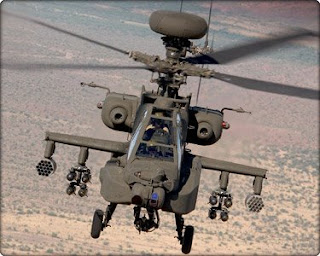
AH-64D APACHE Longbow Helicopters for Saudi Arabia


The Defense Security Cooperation Agency(WASHINGTON) notified Congress of a possible Foreign Military Sale to Saudi Arabia of AH-64D APACHE Longbow Helicopters as well as associated equipment and services.

The total value, if all options are exercised, could be as high as $598 million.

The Government of Saudi Arabia has requested a possible sale of 12 AH-64D Block II APACHE Longbow Helicopters, 30 T700-GE-701D Engines, 12 Modernized Targeting Acquisition and Designation Systems/Pilot Night Vision Sensors, 4 each AN/APG-78 Fire Control Radars and AN/APR-48 Radar Frequency Interferometers, 28 M299 HELLFIRE Longbow Missile Launchers, 12 AN/ALQ-144C(V)3 Infrared Jammers, 12 AN/APR-39A(V)4 Radar Signal Detecting Sets, 12 AN/ALQ-136(V)5 Radar Jammers, 12 AAR-57(V)3/5 Common Missile Warning Systems, 36 Improved Countermeasures Dispensers, and 12 AN/AVR-2B Laser Warning Sets.

Also included: composite horizontal stabilators, Integrated Helmet and Display Sight Systems, repair and return, transportation, depot maintenance, spare and repair parts, support equipment, publications and technical documentation, U.S. Government and contractor technical support, and other related elements of program support. The estimated cost is $598 million.

Saudi Arabia will use the AH-64D for its national security, and protecting its borders and oil infrastructure. The aircraft will provide the Saudi military more advanced targeting and engagement capabilities. The proposed sale will provide for the defense of vital installations and will provide close air support for the Saudi military ground forces. This sale also will increase the Royal Saudi Air Force (RSAF) APACHE sustainability and interoperability with the U.S. Air Force, the Gulf Cooperation Council countries, and other coalition air forces. Saudi Arabia will have no difficulty absorbing these helicopters into its armed forces.


AH-64A Apache
Between 1984 and 1997, Boeing produced 937 AH-64As for the U.S. Army, Egypt, Greece, Israel, Saudi Arabia, and the United Arab Emirates. The combat-proven AH-64A is still in service and includes the following features:

* Two high-performance turboshaft engines and maximum cruise speed of 284 kph
* Laser, infrared, and other systems (including target acquisition designation
sight/pilot night vision sensor) to locate, track, and attack targets.
* A combination of laser-guided precision Hellfire missiles, 70mm rockets, and a 30 mm automatic cannon with up to 1,200 high-explosive,dual-purpose ammunition rounds

AH-64D Apache and AH-64D Apache Longbow
The combat-proven AH-64D Apache and AH-64D Apache Longbow share the following history and characteristics:

* Testing in the late 1990s, delivery in 1997, in production for the U.S. Army and
several international customers.
* Selection by the U.S. Army, Egypt, Greece, Israel, Japan, Kuwait, The Netherlands,
Saudi Arabia, Republic of Singapore, the United Arab Emirates, and United Kingdom.
* Ability to assimilate advancements in digital connectivity, sensors, weapon
systems, advanced training devices, and maintenance support systems.

Apache Longbow Enhancements
The radar-equipped AH-64D Apache Longbow features numerous enhanced capabilities, including:

* Longer-range weapons accuracy and all-weather/night fighting.
* Detection of objects (moving or stationary) without being detected.
* Classification and threat-prioritization of up to 128 targets in less than a
minute.
* Integrated sensors, networking, and digital communications for situational images
awareness, management of the combat arena in real time, and digital transmission
of and target locations to joint operations battlefield commanders.

The AH-64 Apache has been developed since its inception using incremental technology insertions at regular intervals to ensure that the world's most capable multi-role combat helicopter meets the needs of the warfighter today and in the future.

Second Test of Raytheon's Standard Missile-6 By US NAVY


The U.S. Navy conducted the second test of Raytheon Company's Standard Missile-6 extended range anti-air warfare missile on Sept. 5.

Using the newly developed SM-6 active seeker, the missile intercepted a BQM-74 aerial drone. The active seeker, employing the U.S. Navy's legacy command system, autonomously acquired and engaged the target.

The SM-6 integrates the legacy standard missile airframe and semi-active guidance technology with the power of the Advanced Medium-Range Air-to-Air Missile (AMRAAM) active seeker.

The SM-6 provides advanced anti-air warfare and over-the-horizon capabilities against aircraft, unmanned aerial vehicles and cruise missiles. The over-the-horizon capabilities allow the missile to engage a target beyond the ship's line of sight.

Raytheon Company, with 2007 sales of $21.3 billion, is a technology leader specializing in defense, homeland security and other government markets throughout the world. With a history of innovation spanning 86 years, Raytheon provides state-of-the-art electronics, mission systems integration and other capabilities in the areas of sensing; effects; and command, control, communications and intelligence systems, as well as a broad range of mission support services. With headquarters in Waltham, Mass., Raytheon employs 72,000 people worldwide.

Thursday, September 11, 2008

Light Anti-Armor Weapons (M72A7) for Israeli Armed Forces


The Defense Security Cooperation Agency notified Congress of a possible Foreign Military Sale to Israel of M72A7 Light Anti-Armor Weapons (LAAWs) as well as associated equipment and services.

The total value, if all options are exercised, could be as high as $89 million.

The Government of Israel has requested a possible sale of 28,000 M72A7 66mm Light Anti-Armor Weapons (LAAWs), 60,000 M72AS 21mm Sub-Caliber Training Rockets, spare and repair parts, support equipment, publications and technical documentation, personnel training and training equipment, U.S. Government and contractor engineering and logistics personnel services, and other related elements of logistics support. The estimated cost is $89 million.

Israel’s strategic position makes it vital to the United States’ interests throughout the Middle East. Our policy has been to promote Middle East peace, support the Israeli commitment to peace with other regional Arab countries, enhance regional stability, and promote Israeli readiness and self-sufficiency. It is vital to the U.S. national interests to assist Israel to develop and maintain a strong and ready self-defense capability. This proposed sale is consistent with those objectives.

The proposed sale will enhance the foreign policy and national security objectives of the U.S. by providing the Israeli Government with a lightweight assault rocket that will enable Israel to maintain its operational capability, and provide greater mission flexibility to deter aggression in the region. Israel will have no difficulty absorbing this weapon capability into its armed forces.

The proposed sale of this equipment and support will not affect the basic military balance in the region.

The principal contractor will be Talley Defense of Mesa, Arizona. There are no known offset agreements proposed in connection with this potential sale.

Implementation of this proposed sale will not require the assignment of any additional U.S. Government or contractor representatives to Israel.

There will be no adverse impact on U.S. defense readiness as a result of this proposed sale.

This notice of a potential sale is required by law; it does not mean that the sale has been concluded.

Disclaimer:

All the contents being published on this blog have been taken from various prominent Defence Journals/ websites with few format changes to let the readers get important defence related developments on single place. Source of every news has been mentioned at the end of every post. Comments from Author of the Blog has been separately written under "My Comments". We do not claim ownership of material being published. Wherever references haves not been qouted, will soon be done.